
Best Canopy for Farmers Market: What Weekly Vendors Actually Need
Key takeaways:
- The right farmers market canopy depends on how often you sell, from weekly vendors to full-season sellers to those building a brand.
- Most markets require a straight-leg 10x10 canopy weighted to about 40 pounds per leg, or 160 pounds total, before you can set up.
- Look for at least 300D polyester with a PU coating and sealed seams for real waterproof protection, and 600D for heavy year-round use.
- Steel frames suit most vendors for their strength and value, while aluminum is a lighter, rust-resistant option at a higher price.
- Many markets require CPAI-84 or NFPA-701 fire certification, so confirm the standard your organizer accepts before buying.
- The Lite-30 Commercial is a solid entry point, while the Core-35 Premium adds hexagonal-leg stability for frequent use, and custom models turn the booth into a branding tool.
Introduction
At a farmers market, your canopy takes a beating that most tents never see. Early setups in the dark, full sun for hours, sudden wind and rain, and packing it down again every single week.
Recreational canopies aren't built for that pace. They are designed for lighter use, such as beach trips, backyard shade, or picnics, and often struggle once the weekly wear sets in.
This guide covers what a farmers market canopy actually needs, from fabric and frame construction to proper anchoring and overall durability.
What Do Most Farmers Markets Actually Require?
While requirements vary by event organizer, most follow a similar set of rules. These standards determine whether you can set up, so it is worth checking them before comparing canopies.

Durable Frame Material: Steel vs Aluminum
Steel and aluminum frames can both provide strong performance, but they suit different vendor needs.
Steel is the practical choice for most farmers market vendors. It is strong, affordable, and well-suited to repeated setup, outdoor exposure, and windy market conditions.
Aluminum is lighter, rust-resistant, and easier for solo vendors to carry. It also performs well in coastal or humid environments, though it usually comes at a higher price.
High-Denier Canopy Fabric
For regular market use, look for at least 300D polyester, while 600D is better suited to heavier, year-round use. The denier count indicates how substantial the fabric is.
Protective finishes matter just as much. A PU coating and heat-sealed seams help keep rain away from products, packaging, signs, and equipment, while UV-resistant treatment helps limit sun damage and fading during long market days.
Proper Canopy Weight
A farmers market canopy should be weighted before the event opens, not after the wind starts picking up.
Many organizers require around 40 pounds on each leg, which means a four-leg canopy may need about 160 pounds in total. The exact rule varies, but every leg should be secured with an approved weight that does not swing, shift, or block the walkway.
Straight Leg Construction
Booth space is limited, and every inch matters once tables, storage, and displays are in place.
Straight legs keep the frame within the assigned footprint and provide the full usable area beneath the canopy. Slant legs spread outward near the ground, which can interfere with neighboring booths and reduce the space available inside.
Straight-leg frames also make it easier to attach sidewalls and keep the setup aligned with the rest of the market row.
Read: Slant-Leg vs. Straight-Leg Canopy: Which One Suits Your Outdoor Needs?
Fire-Rated Fabric Certification
Many markets, especially on public property or in California, require fire-retardant certified fabric such as CPAI-84 or NFPA-701.
Before buying, vendors should confirm which certification the organizer accepts and whether a sewn-in label or a separate certificate is required.
Universal Canopy Size
A 10x10 canopy is the standard choice for most farmers markets because it fits a typical booth space without taking over the neighboring area.
It provides enough room for tables, stock, and a small working space while remaining easy to transport and set up.
Larger 10x15 or 10x20 models work better for double booths, food preparation, or larger displays, but only when the organizer has approved the extra footprint.
Also Read:
- Best 10x10 Pop Up Canopy (2026): Top Picks for Every Budget
- Best 10x15 Pop Up Canopy (2026) for Vendors and Outdoor Events
- Best 10x20 Pop Up Canopy (2025): Top Picks for Outdoor Events
- Best 12x12 Heavy-Duty Canopy (2026): More Space, Built to Last
Best Farmers Market Canopies from MasterCanopy for 2026
The right farmers market canopy depends on how often you sell and what your booth needs to do.
The options below come in standard sizes on steel frames, handle winds up to 50 km/h when properly anchored, and use fire-certified fabric. Sidewall and custom-print versions are also available, allowing you to match the setup to your current needs.
Best Canopy for First-Time Farmers Market Vendors
While you can easily find a $100 canopy, cheaper tents often wear out quickly under weekly use, costing more in the long run than investing in one built to last.
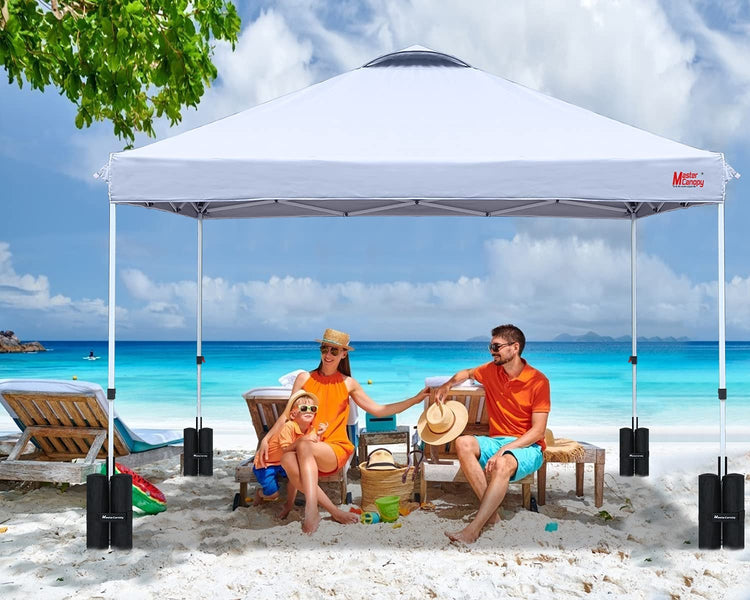
The Mastercanopy Lite-30 Commercial Canopy Tent Instant Shelter is a practical starting point for new and weekly vendors who need a dependable canopy without moving into the heaviest frame tier.

It gives you a steel frame, straight square legs, a 300D silver-coated top, a 3-height adjustable setting, and comes in 10x10, 10x15, and 10x20 sizes.
For vendors who need more protection, the Mastercanopy Lite-30 Commercial Canopy Tent with Sidewalls adds removable panels around the same commercial setup.

The walls can block afternoon sun, reduce wind-driven rain, hide storage, or create a cleaner background behind the display. Because they are removable, vendors can adjust the booth as conditions change instead of keeping it fully enclosed all day.
Price: From $199.95
Also Read:
- Best Commercial Pop Up Canopy for Vendors & Events
- Best Pop-Up Canopy With Sidewalls for Outdoor Vendors and Events
Best Canopy for Full-Season Market Vendors
For vendors selling at two or more markets each week, the Mastercanopy Core-35 Premium Heavy Duty Instant Canopy Tent is a step up from the standard commercial frame.

Its hexagonal steel legs add rigidity over square-leg builds, so the canopy stays steadier through constant setup cycles and holds firmer when the wind picks up.
An upgraded center support hub strengthens the top of the frame, and sturdy locking buttons hold each leg securely in place, which matters when the tent goes up and down hundreds of times a season.

A sidewall version—the Mastercanopy Core-35 Premium Heavy Duty Instant Canopy Tent with Sidewalls—is also available for vendors who need enclosed coverage for weather protection or to create a more private setup.
Price: From $229.95
Also Read:
Best Canopy for Market Vendors Who Want to Stand Out
In a row of plain white tents, a custom canopy turns your booth into a branding tool. Built with heavier 600D ripstop polyester and full Pantone dye-sublimation printing, the canopy top stays vibrant and fade-resistant season after season.

The Mastercanopy Lite-30 Custom Canopy Tent Deluxe prints your logo, colors, and graphics onto the same dependable commercial frame, turning the booth into a branding tool.
It is built as a package, so you can scale the coverage to the branding you need, from a printed top up to full sidewalls.

How to Anchor Your Canopy at a Farmers Market?
A canopy should be fully secured before the market opens. Use the anchoring method that fits the surface and meets the organizer's weight requirement.
- To reach 40 pounds per leg: Use properly filled sandbags, water-weight bags, or another approved weight on every leg.
- On hard surfaces: Use weight bags on asphalt, concrete, or paved areas where stakes cannot be used.
- On grass: Add stakes and guy lines where permitted, but check whether weights are still required.
- Before opening: Anchor the canopy first, then add sidewalls, signs, and displays.
FAQs
Can I upgrade a plain canopy to a custom-printed one later?
Yes. Vendors can often add printed sidewalls, table covers, banners, flags, or signs without replacing the entire canopy. A custom-printed replacement top may also be possible when it is compatible with the existing frame.
Can one person set up a farmers market pop-up canopy?
Absolutely. Modern pop-up canopies typically feature collapsible frames and one-push controls that make setup manageable for one person.
What color is best for a market canopy?
White is a popular choice because it keeps the booth bright and may meet organizer preferences. Custom colors and printed designs can improve visibility, but vendors should confirm whether the market has any restrictions before ordering.
How long does a commercial farmers market canopy last?
A commercial canopy used weekly typically lasts more than five years with proper care, while heavy-duty models can last even longer. Lifespan depends on setup frequency, weather exposure, transportation, storage, and regular maintenance.
When should you replace a farmers market tent instead of repairing it?
Minor issues such as a worn canopy top, torn sidewall, loose fastener, or damaged carry bag can usually be repaired or replaced individually.
Replace the entire canopy when the frame opens unevenly, the legs no longer lock securely, multiple truss bars are bent, or the structure can no longer remain stable.
Conclusion
Whether you are a first-season vendor, a full-time market seller, or a brand-focused business, every booth needs a canopy that withstands weekly use while keeping your setup stable, weather-protected, and compliant with market requirements.
From a standard open-frame canopy to a fully enclosed sidewall setup or a custom-branded display, the right choice is the one that matches your selling schedule and business goals.
Explore the full MasterCanopy pop-up canopy collection to find a model built for the way you sell, or create your own with custom canopies that help your booth stand out.